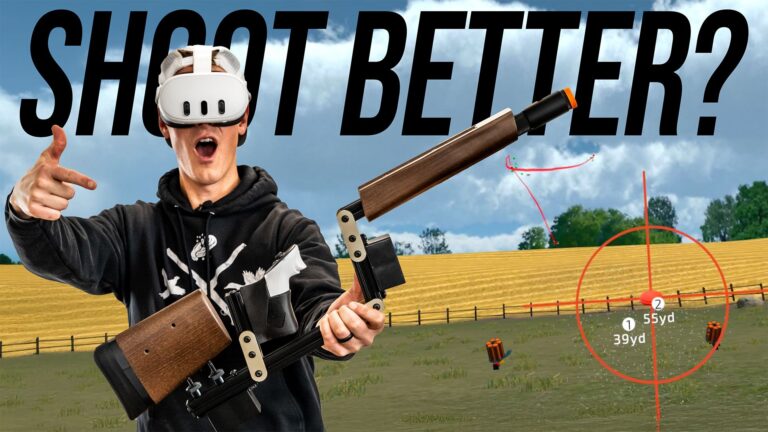
How big a difference does a recoil pad actually make? I had a Beretta 694 that always put more recoil into my face than I wanted, so I went out and bought a whole bunch of pads to try and fix it. I figured most of them would be an improvement over the factory pad, but a couple of them actually made the gun feel worse.
In this article
- The Recoil Pads We Tested
- Factory Beretta pad
- LimbSaver AirTech Precision Fit ($42)
- KICK-EEZ Modified Trap ($50)
- Pachmayr XLT Trap ($73)
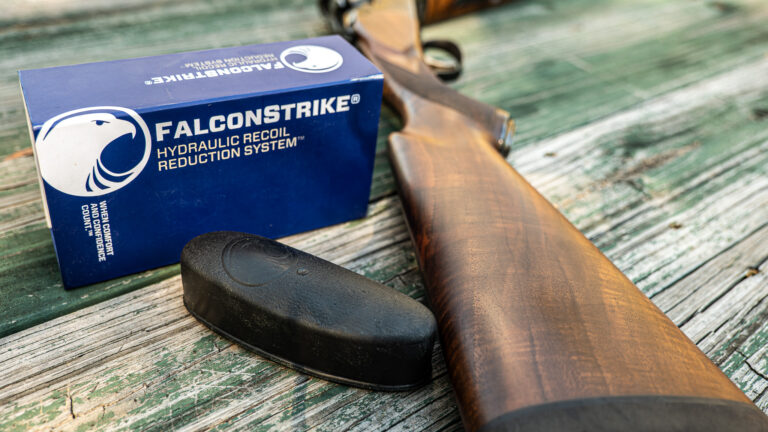
- FalconStrike ($189)
- What about PFS and GraCoil?
- How we tested these recoil pads
- Results: ranking every recoil pad
- Last place: Pachmayr XLT Trap
- Fourth place: LimbSaver AirTech
- Tied for second: KICK-EEZ and the factory Beretta pad
- Winner: FalconStrike
- What the slow-mo and teardown showed
- FalconStrike pros and cons
- Pros
- Cons
- Which shotgun recoil pad should you buy?
Now, to be fair, you should know up front that FalconStrike is a TFL partner, and I mention them a lot. Before I started, I asked them how they felt about me putting their pad up against the top brands, and they told me to go for it. Their take was that anything cheaper isn’t as good, and anything just as good costs a lot more and is harder to install. So I set out to see if that held up.
Quick take
Winner overall: FalconStrike
Biggest surprise: KICK-EEZ Modified Trap, tied for second with the factory Beretta pad
Last place: Pachmayr XLT Trap
The Recoil Pads We Tested
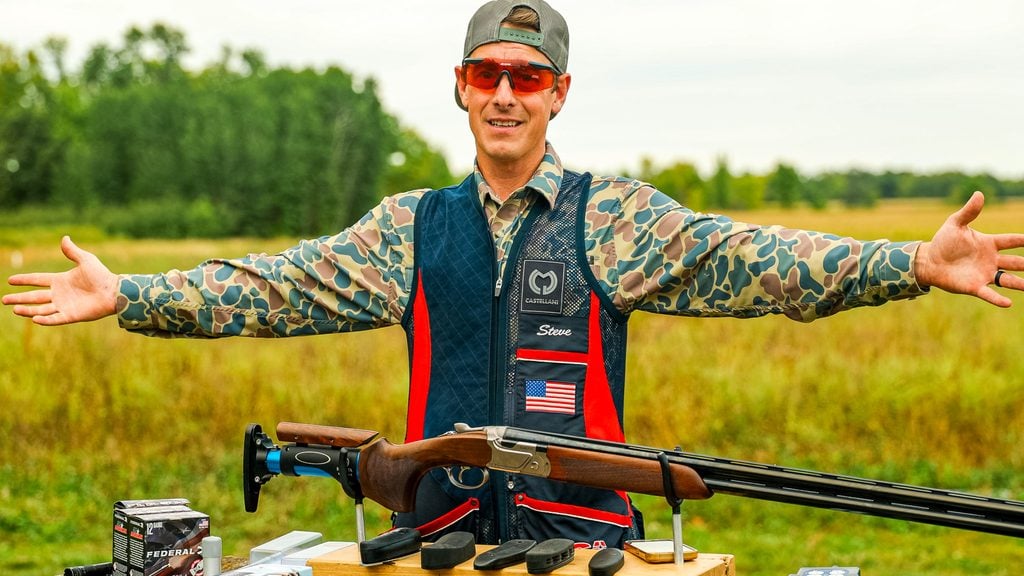
Factory Beretta pad
This is the pad the 694 comes with, and it’s very thin. I’d always blamed it for the recoil I was taking in the face, which is what started this whole project in the first place.
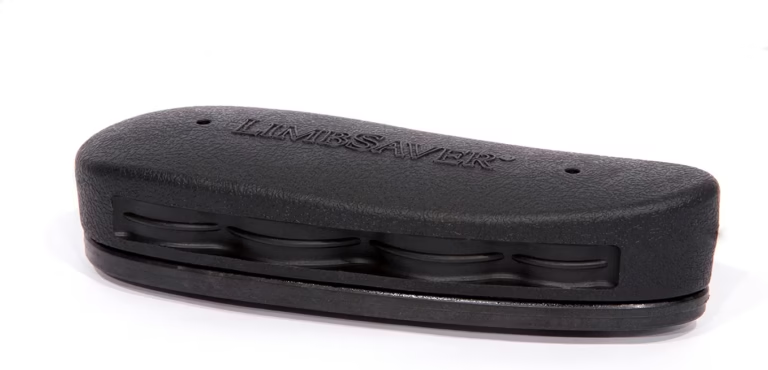
LimbSaver AirTech Precision Fit ($42)
I bought this one specifically for the 694. It was very easy to install and fit decently, although it isn’t perfect. The back had circular knobs I had to grind down, because the back of the 694 stock is flat. On a wood stock with holes for those knobs to sit in, that might not be an issue.
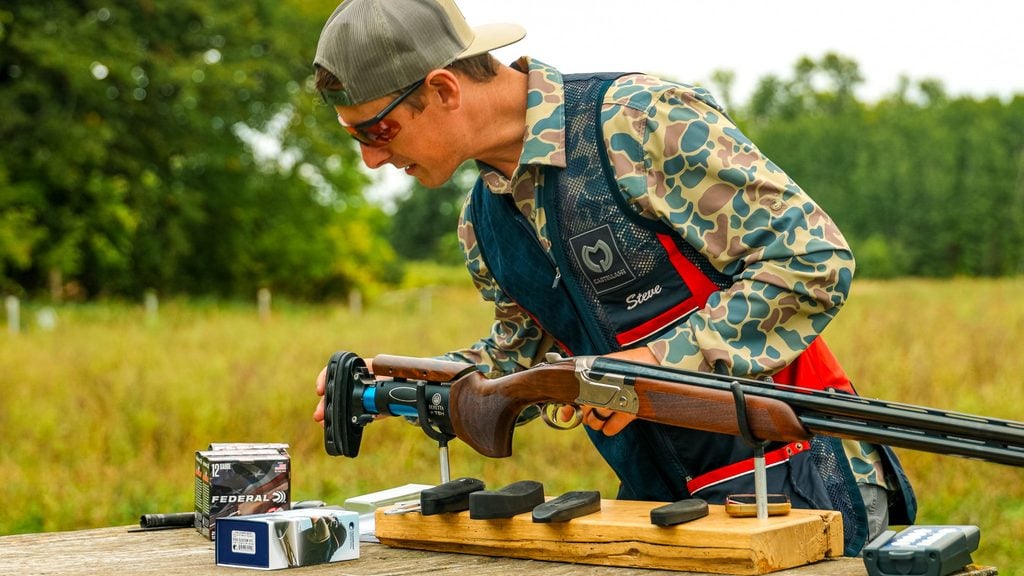
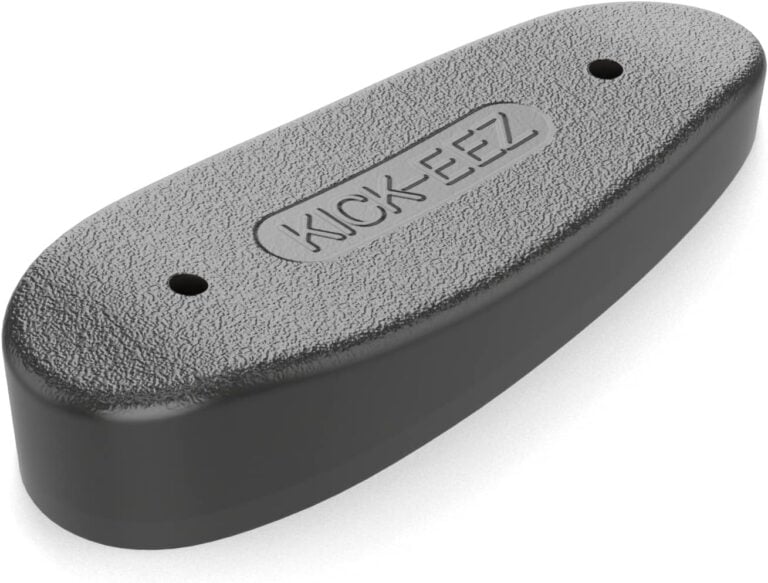
KICK-EEZ Modified Trap ($50)
Honestly, when I first picked this one up, it felt like a piece of rubber. It isn’t very thick, but it has a totally different shape and contour than the LimbSaver, and I didn’t go in with high expectations.
Pachmayr XLT Trap ($73)
This was the thickest pad of the bunch, with the most squish in the middle and firmer sections on the top and bottom. Just looking at it, I would have bet on it doing well. It also adds some weight to the back end of the gun.
FalconStrike ($189)
This one is a different animal. FalconStrike calls it a hydraulic recoil reduction system, and it’s filled with fluid with plates inside. When you shoot, that energy pushes the fluid through holes in the plates, and some of it is dissipated as heat. It also widens out as it compresses, which spreads the force over a bigger area.
It also installs a little differently than the others. Instead of screwing the pad straight onto the stock, you screw on a plate, attach the pad, and flip the cams up to lock it in place.
What about PFS and GraCoil?
There are pricier and more involved options out there, and I did consider them. A PFS system means replacing that whole section of your stock, and at around $1,500, I passed. The GraCoil is a shock absorber system with some adjustability, but on a standard stock you have to drill for it, mount it, set the tension, and keep it oiled, and it wouldn’t work on the 694 anyway. If you’ve run either one, I’d love to hear what you think.
How we tested these recoil pads
Here is the part worth knowing before you read the results. Recoil itself never changes, because that’s just physics: the shot goes one way and the gun comes back the other. What changes is felt recoil, meaning how that force gets spread into your shoulder and face, and that’s where a pad can make all the difference.
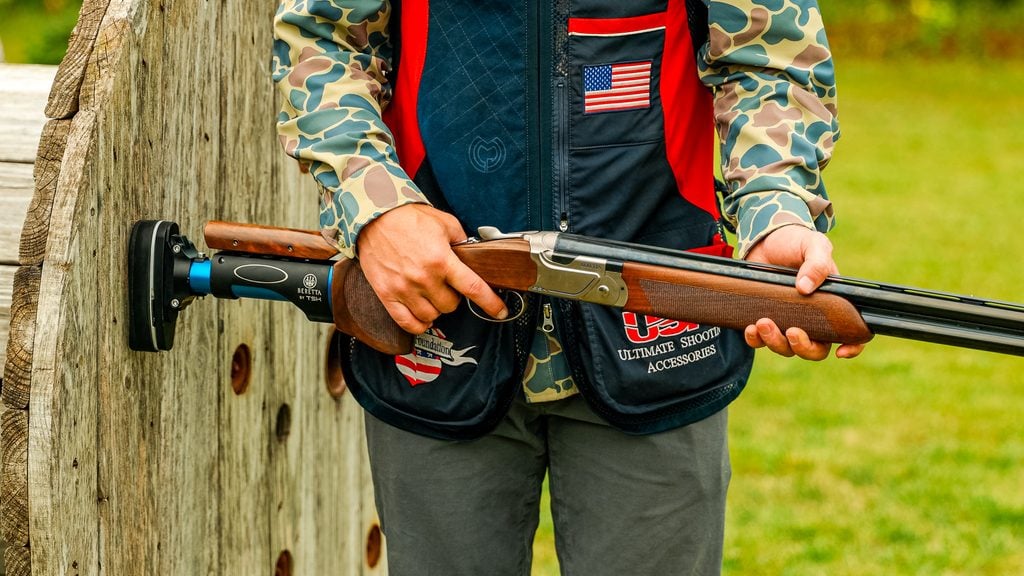
We kept the test simple. I shot each pad on the same Beretta 694 and gauged how it felt; then we filmed every pad in slow motion and cut most of them open to see what was inside. The rankings come down to how each pad felt to me, not a recoil meter, and down the road I’d love to find a way to actually measure felt recoil, peak force, and how that force is distributed.
Results: ranking every recoil pad
Last place: Pachmayr XLT Trap
This one surprised me the most, and not in a good way. Being as squishy as it is, I expected it to be the most comfortable, and while my shoulder felt great, I took a lot into my face. I think it comes down to the contours of the pad, because that one hurt the most.
Fourth place: LimbSaver AirTech
I had high hopes for the LimbSaver. It felt good on the shoulder, but I was still getting a lot more jump than I expected, which is the exact problem I was trying to solve on this gun. There was still a lot coming into my face, and I didn’t enjoy shooting it.
Tied for second: KICK-EEZ and the factory Beretta pad
This is the result I didn’t see coming. The two thinnest pads, with the least contour, ended up tied for second. The KICK-EEZ reduced the peak force a lot more than I thought it would, and I wasn’t getting nearly as much in the face as I was with the thicker pads.
The factory pad held its own too, which tells you something. A thicker aftermarket pad is not automatically an upgrade, and on my gun, two of them made things worse.
Winner: FalconStrike
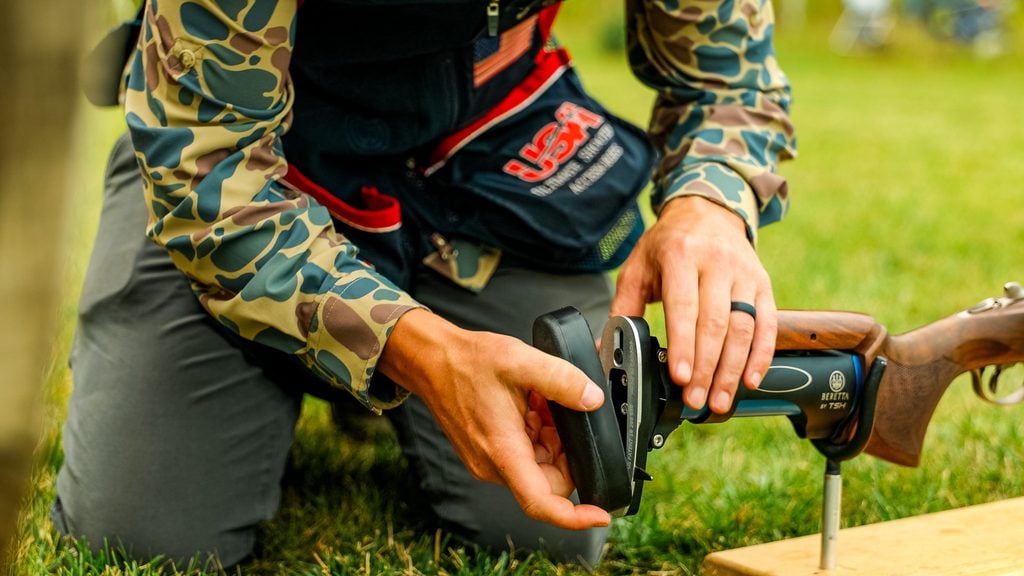
The winner, hands down, was the FalconStrike. The impulse felt different, with less peak force spread out over a longer period, and it felt good on my face. Across the whole test, I found that pads with less built-in shape felt better, and the FalconStrike adds something none of the others can: as it compresses, it fits the shape of your body, because none of us are built the same.
What the slow-mo and teardown showed
Conor lined up the slow-motion footage side by side, and it was fascinating to watch. Every pad compressed and rebounded a little differently, and the two pads I liked least had an upward motion as they rebounded, while the KICK-EEZ was almost dead. I’d be careful reading too much into it, though, because what you see on camera and what you feel behind the gun can be two different things.
What I found most interesting from the slow motion is that if you watch the comb on the TSK stock, you’ll see that the front part of the comb has a certain vibration to it, and I’m willing to bet that doesn’t make it feel better on your face when you shoot it. This issue we experienced with 694 may well go beyond just recoil pads, but that being said, I noticed a significant difference shooting the different pads.
Cutting them open was a little disappointing, as most of the pads are simply a form of rubber and are consistent all the way through, until you cut open the FalconStrike.
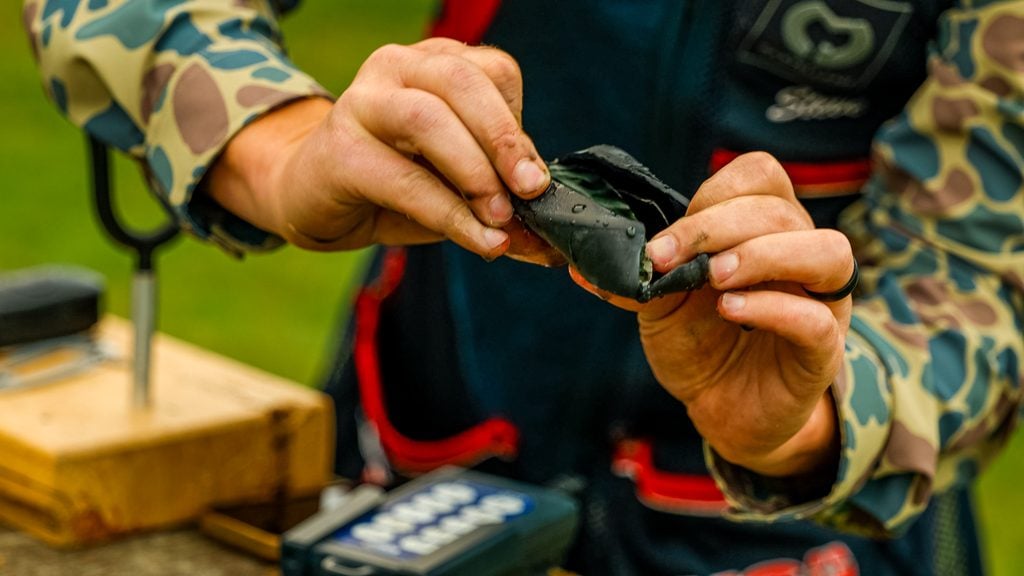
The FalconStrike was full of fluid, a lot more than I expected, with a stack of thin plates that have holes in them and gaps the fluid has to squeeze through. This helps dissipate the energy as the fluid is forced around the plates.
FalconStrike pros and cons
Pros
- The best felt recoil of the five pads on my 694
- Reduces peak force and conforms to your shoulder
- Simple plate and cam install with no grinding
Cons
- At $189, it costs nearly four times what the KICK-EEZ does
Which shotgun recoil pad should you buy?
Can a recoil pad make a difference? Absolutely, but there’s more to it than meets the eye. Thin pads can be halfway decent, and thick pads with lots of curves can feel like trash. Most of the time, a pad that costs $50 or less won’t do much over your factory pad unless what you have on there is really bad, although that isn’t an absolute, and the KICK-EEZ proved it.
If you’re going to spend some money to reduce recoil, though, I think the FalconStrike is a great move. My experience with it has been incredible, and this test was affirming for me. To FalconStrike’s point, the cheaper pads weren’t as good, and the options that compete with it cost a lot more and are a lot more complicated to put on.
Some people will tell you recoil doesn’t affect them, and to some extent that might be true, because some shooters are more sensitive than others. But I always say recoil is never your friend. It never helps you shoot better, and whether you notice it or not, it wears on you over a long day of shooting.
I’ve heard so many stories from people who couldn’t shoot anymore because of shoulder surgeries or other conditions, and FalconStrike got them back in the game. I just love hearing stories like that.
At the end of the day, I want you enjoying your time shooting with friends and family, and I’m not all that concerned about which pad you run as long as you’re having a great time. So tell me where I got it wrong: what recoil pad are you running, and has it actually made a difference?