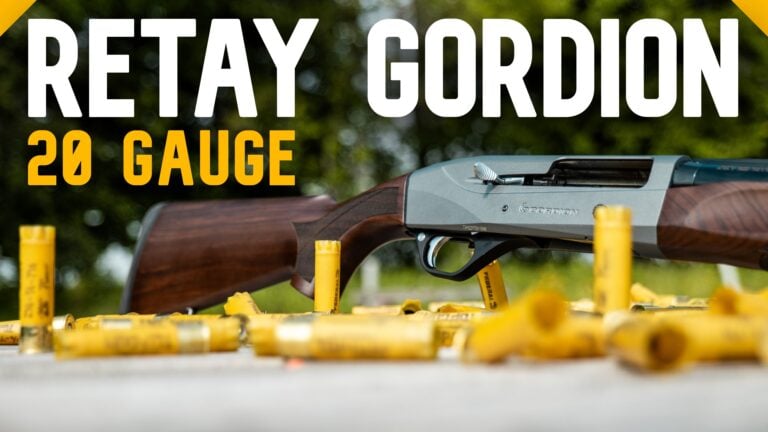

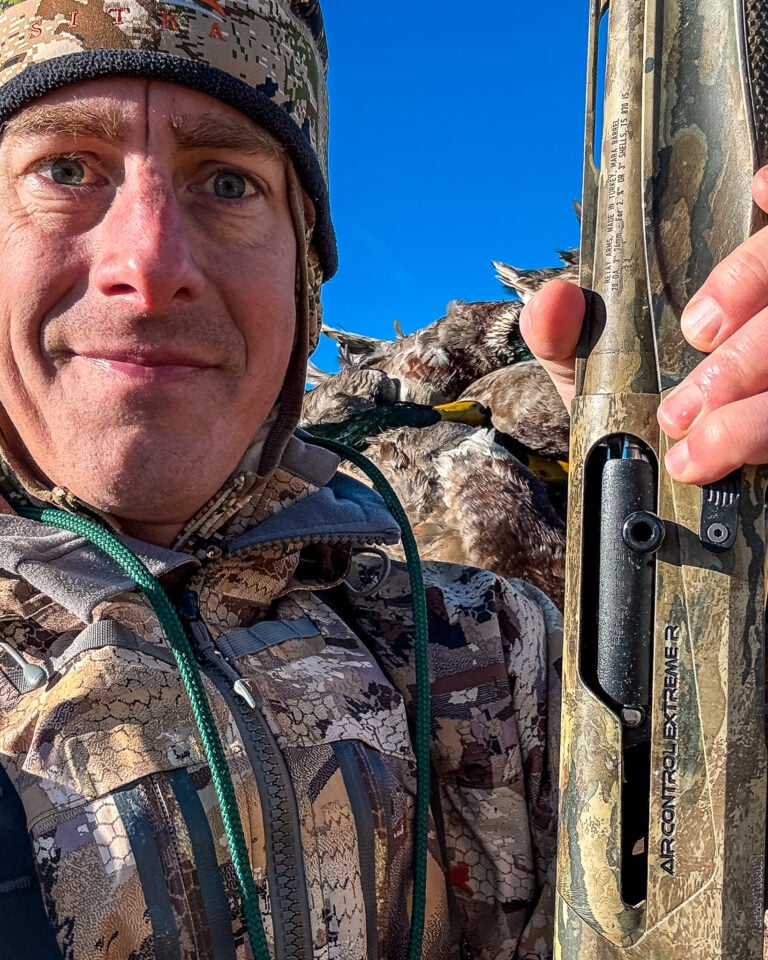
We already put the Retay ACE 20 gauge through a full review, but there is only so much you learn about a duck gun on the range. So I took it to Saskatchewan for big northern mallards to answer the question many duck hunter asks about a sub-gauge: is a 20 really enough gun for ducks and geese?
In this article
Quick take
Verdict: A soft-shooting, dependable 20 gauge that handled big northern mallards inside 40 yards and never gave me a single problem in the field.
Best for: Duck hunters who want an easy-shooting camo semi-auto and care more about function than flash.
Skip it if: Most of your shots are long birds where a 12 gauge earns its keep, or you want a high-end finish.
Why I took the ACE to Canada
I had already spent time with this gun, and I liked it a lot, mostly because it is soft shooting, the controls are great, and at its price point it is a tremendous value. What I had not done yet was hunt it on the kind of birds that make most people reach for a 12 gauge.
We got two very different hunts out of the trip. Day one was a frosty, foggy morning on a small dugout that had been full of mallards the night before, and our last hunt was a warm evening in a flooded field with thousands of birds pouring in from the north. We were even getting bit by mosquitoes in late October, which I still can’t believe.

What stood out in the field
Easy on the recoil
The first thing I noticed on day one was how easy this gun is on the recoil. Inertia guns have a reputation for kicking harder than gas guns, but the ACE stayed comfortable through a full morning of shooting, and that matters when birds are coming in wave after wave.
Controls and the unload feature
The Retay ACE 20 gauge is a very easy gun to handle, and the controls are right where you want them. One feature I really appreciate on a duck hunt is the unloading. Pull up on the bolt release and the shells come out of the magazine tube, so you are not running every shell through the action when it is time to unload.
The drop-out trigger
The other thing that is uncommon on a semi-auto is the drop-out trigger. After a few days in the blind, being able to drop the trigger group out makes field stripping and cleaning so much easier.
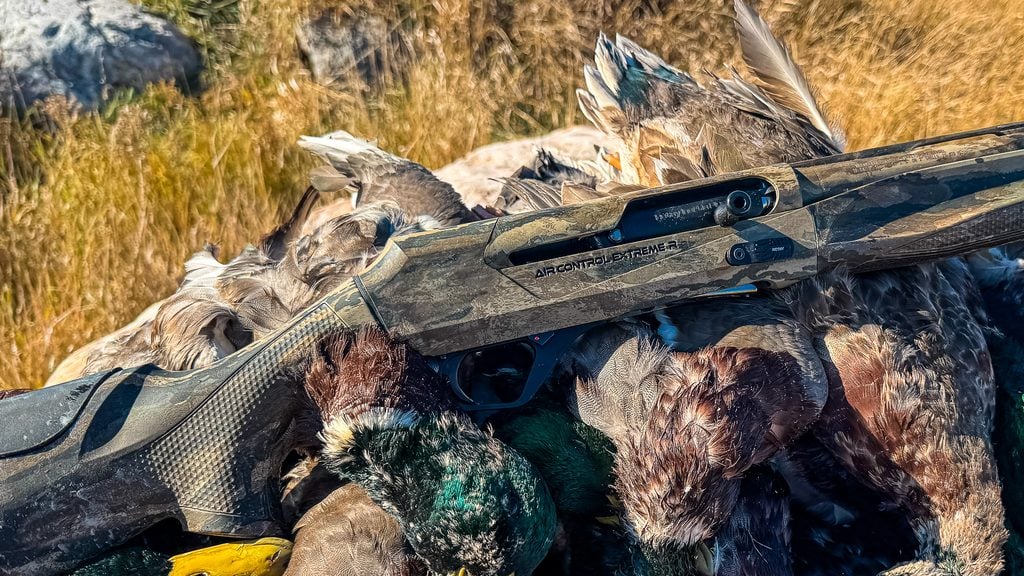
How the Retay ACE 20 gauge shot on Canadian ducks
It took me a little bit to settle in with the gun, but once I did, it felt great in the hands. Reliability was exactly what I hoped for. It never went out of battery, it cycled reliably, and it held up with no issues on the frosty morning and the warm evening alike.
Is the Retay ACE 20 gauge enough for ducks?
For most of what we shot, yes. The birds didn’t decoy extremely well that first morning, but they wanted to be there, and for the most part they worked in within 40 yards. Inside that range, the 20 gauge did everything I asked of it.
Here is the part worth being honest about. There were a few shots where the birds were out there a ways, and I wished I had a 12 gauge. That is not a knock on the ACE, it is just the reality of a 20 gauge, so if you hunt a lot of long birds, pick your loads and your shots accordingly.
Pros and cons
Pros
- Soft recoil for an inertia gun
- Never went out of battery and cycled reliably
- Easy handling with good controls
- Drop-out trigger makes cleaning easy
- Magazine unloading through the bolt release
- Tremendous value at its price point
Cons
- Finish is a little lackluster next to pricier guns
- A 20 gauge gives up some reach on long birds
Who should buy it
If you are looking for value without the flash and flare, and you purely want high functionality, oh my goodness, this is it. The finish is a little lackluster, but you can’t compare a gun that runs $1,049 to $1,149 to one that costs several hundred dollars more.
Anyone looking for a reliable inertia shotgun at a reasonable price should give this one serious consideration. You can see the full lineup on Retay’s site, and if you want the deep dive on specs, fit, and the trigger, our full Retay ACE 20 gauge review covers it.

Final verdict
I enjoyed hunting with the ACE in Canada, and it gave me zero problems from the first frosty morning to the last warm night. Would I have liked to pull the trigger on it a little more on that last hunt? Absolutely, but that is duck hunting. Is a 20 gauge enough gun for you on big ducks, or are you sticking with a 12?